
Crying is a powerful tool for babies to connect and communicate their needs. In fact, how we respond to crying and calm the baby influences our relationship and bonding with them. As parents, we first need to understand why babies cry and how we perceive crying.
Some of you here might wonder: How can I listen to and understand the infant’s needs, and how can crying be a positive emotional interaction? How can we establish rapport with them?
As a new parent, I have been in a similar situation, and I have lost track of the number of times I lost myself in the process of raising a child.
The keyword is self-care and awareness of our own emotions and triggers. Before we delve into this in greater depth, in the series on crying, we will first focus on all possible reasons why an infant cries.
In general, crying is categorised into two main types: physical and emotional.
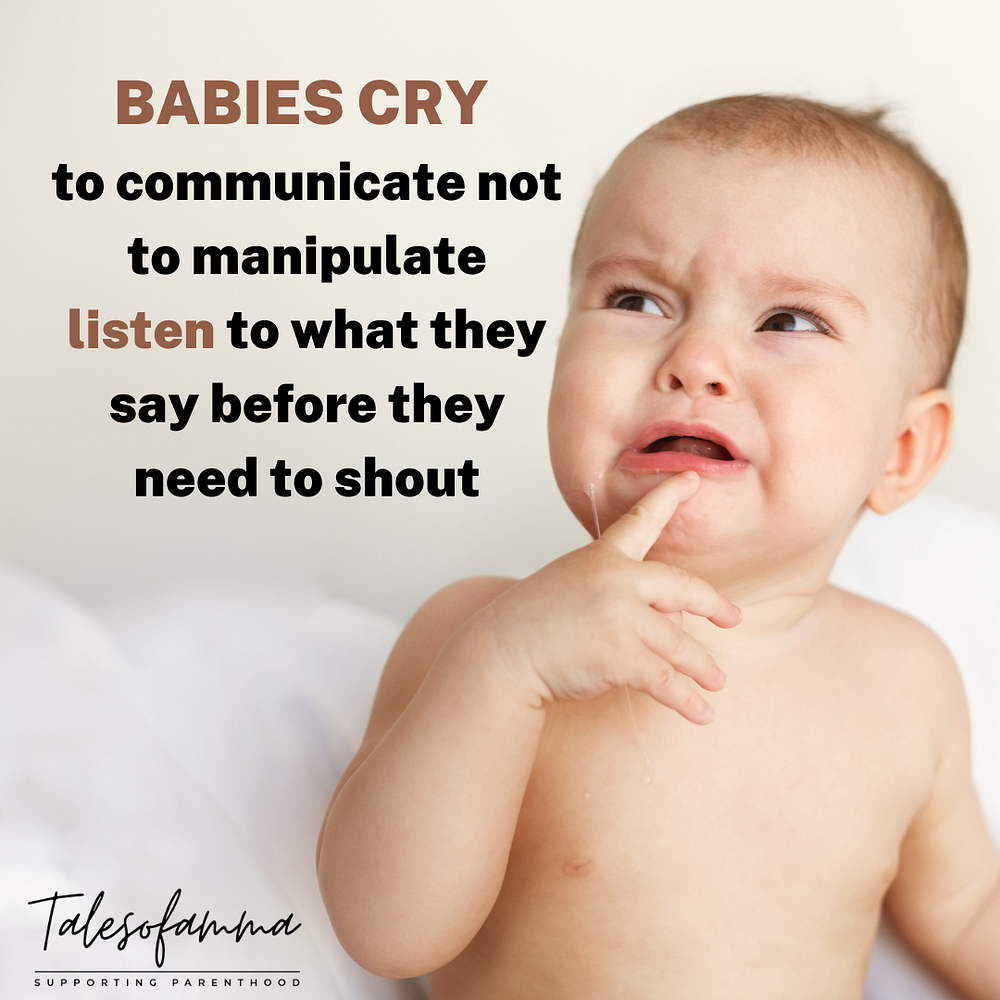
Physical cries in infants and children include,
- Hunger
- Diaper change
- Temperature changes
- Discomforts (Dresses, diapers, sleeping place, the way they’re handled, etc)
- Pain (can be because of vaccination, minor injury, etc.)
- Growth spurts and milestones
Here’s the link: What is witch hour crying and how to deal with it
Emotional crying includes,
- Over/ Under stimulation (Not being touched enough or too much stimulation, loud noises, angry tones)
- Difficult birthing experience
- Emotional neglect by caregivers
- Separation from the primary caregiver
- Anxiety
- Stress and many more
I have listed a common reason here.
Now that we have understood the reasons for crying. In the following article, we will see how to handle physical crying by developing the skill “The art of listening”
Ending with a statement by Dr Medina, “If the infant is marinated in safety — an emotionally stable home — the system will cook up beautifully. If not, normal stress-coping processes fail. The child is transformed into a state of high alert or a state of complete collapse. If the baby regularly experiences an angry, emotionally violent social environment, his vulnerable little stress responders turn hyper-reactive, a condition known as hyper-cortosolism. If the baby is exposed to severe neglect, like the Romanian orphans, the system becomes under-reactive, a condition known as hypocortisolism Life, to quote Bruce Springsteen, can seem like one long emergency.”
“Infants younger than 6 months old can usually detect that something is wrong. They can experience physiological changes — such as increases in blood pressure, heart rate, and stress hormones — just like adults. Some researchers claim they can assess the amount of fighting in a marriage simply by taking a 24-hour urine sample of the baby. Babies and small children don’t always understand the content of a fight, but they are very aware that something is wrong.”