
Understanding your baby’s behavioural states can be very helpful for parents. In this article the following questions that parents have are covered.
- What is the Newborn Behavioural Observations (NBO) system?
- Why is it important for parents and caregivers to learn about behavioural states?
- What are the behavioural states? And what are the types of behavioural states?
- Should I wait till my baby cries before feeding?
- When is the best time for Infant massage?
- When can a newborn breastfeed well?
- What is the Newborn Behavioural Observations (NBO) system?
Infants are born with behavioural cues that help them engage with the world around them. For parents and caregivers, it helps them observe, manage their emotions, and provide the support the infant needs.
To learn more about NBO, visit this
Out of 18 neurobehavioural observations, the infant’s behavioural states help parents greatly in navigating wake, sleep, and feeding cycles.
2. Why is it important for parents and caregivers to learn about behavioural states?
The newborn is capable of communicating his/ her needs, so the course of infant development depends to a great extent on the caregiver’s ability to read and respond to these communicative cues.
Because early life experiences have a lifetime’s influence, laying the foundations for all aspects of development and functioning: physical, social, emotional, and cognitive.[1]
The biggest advantage of learning about infant behavioural states is strengthening the relationship between parent and child and supporting the family adjustment. Specifically, several studies consistently have reported positive effects of exposure to the NBAS on variables such as maternal confidence and self-esteem, paternal attitudes toward and involvement in caregiving, parent–infant interaction, and developmental outcome [2]
3. What are the behavioural states? And what are the types of behavioural states?
Babies experience six different behavioural states/ consciousness. Knowing about these states can make the early days easier to manage.
The six behavioural states are deep sleep, light sleep, drowsy, quiet alert, active alert, and crying.
Let’s take a closer look at each state.
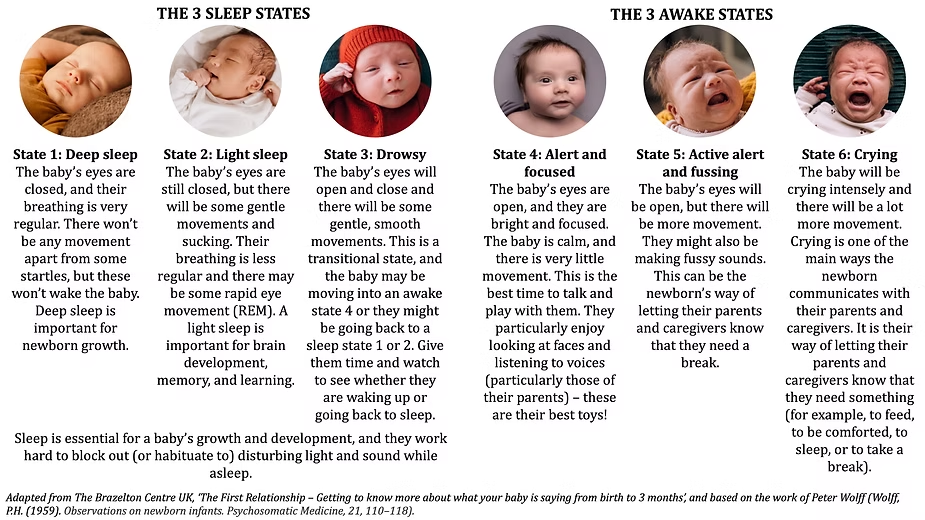
Image source: https://www.inspirethemind.org/post/understanding-baby-language
- Deep sleep (Quiet Sleep)
Deep sleep is important for a baby’s growth and development. Most infants sleep about 10 to 12 hours each day.
- Baby’s breath is steady, deep and slow.
- Non- REM sleep
- Motionless/ No spontaneous movement
- Startles may appear
2. Light Sleep (active sleep)
In this state, the baby’s brain is active, organising experiences and information.
- Irregular/Shallow/ Faster Breathing or Irregular respiration
- May notice rapid eye movement under the lids
- Sucking movements
- Smiles/ Sighs from time to time
- Jerky movements (motor activity)
3. Drowsy
Drowsy is also the transitional state; in this behavioural state, the baby may try to wake up, or the baby is going back to sleep
- Open and close the eyes
- Fluterring eye lids
4. Quiet Alert
Best state for feeding, bonding, massage, talking, singing etc.,
In this state, the baby is
- Face is bright
- Makes eye contact
- Calm and relaxed
- Regular breathing
- Concentration
- Minimal motor activity. Avoids overstimulation to maintain the quiet alert state.
5. Active Alert
This state is followed by a quiet alert state. Your baby may be overstimulated or bored, or need some change. With proper response, the baby may return to a calmer, quieter, alert state.
In this state,
- The baby may have difficulty paying attention
- Body activity
- Fussing
6. Crying
This state needs immediate attention to ensure your baby’s needs are met. It can be hunger, wet nappies or anything that needs to be changed or stopped. Once responded the baby will return calmer state
- Change in skin colour
- Extreme body activity
4. Should I wait till my baby cries before feeding?
No, you should feed your baby on early hunger signs. Crying is considered a late hunger cue, and the baby is extremely hungry and fussy, which makes it difficult to soothe and feed effectively.
Infants from 0 to 6 months must be fed on early hunger signs.
Early hunger signs include hand-to-mouth movements, lip smacking, and the rooting reflex, which infants exhibit during the drowsy and light sleep behavioural states.
It’s important for caregivers to ensure the baby is fed when they show early signs of hunger.
5. When is the best time to do infant massage?
If you want to give your baby a massage, it’s best to do it when they are in a quiet, alert state.
In this state, the baby has regular breathing, focused breathing and calm.
6. When can newborns breastfeed well?
A baby can usually breastfeed well, except during deep sleep and crying. Infants start showing hunger cues in light sleep and drowsy, when offered breast, they can feed well in these behavioural states too.
Reference: